Foot Zone Therapy
Foot Zone Therapy is a hands-on wellness modality that uses a specific sequence of pressure and movement techniques on the feet. It is based on the concept that areas of the feet correspond with different areas, organs, glands, and systems of the body.
A complete Foot Zone works systematically over the entire foot—including the soles, tops, sides, toes, heels, and areas around the ankles. Rather than concentrating only on an area associated with a particular concern, the practitioner follows a comprehensive sequence during each session.
Foot Zoning is used as a complementary wellness practice with the goal of supporting relaxation, balance, body awareness, and overall well-being.
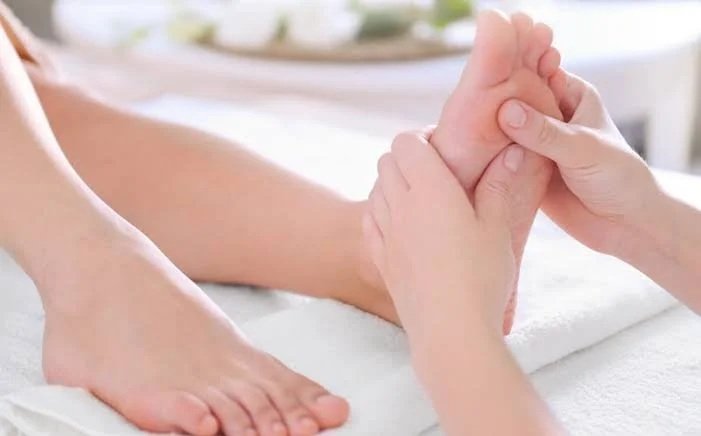
How is Foot Zoning Different From Reflexology?
Foot Zoning and reflexology share many similarities, including the use of mapped areas of the feet and the application of pressure to specific points.
Traditional reflexology focuses on reflex points associated with different organs and systems of the body. A session may emphasize specific points based on the practitioner’s approach and the client’s individual needs.
Foot Zoning uses a more structured and comprehensive approach. During a session, the practitioner follows a specific sequence of signals throughout the entire foot rather than working only selected reflex points.
Because the complete sequence is followed, a Foot Zone typically takes approximately 45–60 minutes.
A Brief History of Foot Zoning
The modern development of reflexology in the United States is often traced to the early 1900s and the work of physician William H. Fitzgerald, who developed a system known as Zone Therapy. Fitzgerald theorized that the body could be divided into ten longitudinal zones and explored the relationship between these zones and different areas of the body.
His work was later expanded by physician and chiropractor Joe Shelby Riley, who explored reflex points involving the feet, hands, ears, and other areas of the body.
Physiotherapist Eunice Ingham further developed the use of the feet in reflexology during the 1930s. Her detailed mapping of reflex areas on the feet became an important foundation for modern reflexology, and she is frequently referred to as the “mother of modern reflexology.”
Different approaches to reflexology and Foot Zone Therapy continued to develop from these early systems. Today's practitioners may use different maps, sequences, techniques, and philosophies depending upon their training.
A Whole Body Approach
One of the primary differences between Foot Zoning and more traditional reflexology is the comprehensive nature of the Foot Zone sequence.
Rather than focusing only on individual reflex points, the complete sequence works with signals associated within Foot Zone practice and the body's major systems, including:
Skeletal and muscular systems
Endocrine system
Lymphatic system
Circulatory system
Digestive and other organ systems
Reproductive system
Nervous system
Cellular function
Foot Zoning also incorporates concepts found in traditional energetic wellness practices. Depending on the Foot Zone method being used, the sequence may include points associated with meridian pathways and chakra systems, with the intention of supporting energetic balance throughout the body.
The Nervous System
Another area of focus within Foot Zoning is the nervous system.
Specific points within the Foot Zone sequence are associated by practitioners with the vagus nerve and the parasympathetic nervous system, commonly referred to as the body's “rest and digest” state.
The intention is to create an environment of relaxation in which the body has an opportunity to move away from a prolonged stress response and toward a calmer state.
Emotional & Energetic Balance

Foot Zone philosophy also recognizes the relationship between physical and emotional well-being.
Techniques within the sequence may be used with the intention of addressing areas practitioners describe as stagnant or blocked energy, including energetic patterns traditionally associated with stored emotional stress or trauma.
Rather than separating physical, emotional, mental, and energetic well-being, Foot Zoning approaches the individual as a whole.
The overall goal of Foot Zoning is balance. Rather than attempting to diagnose or treat an individual condition, the complete Foot Zone works systematically through the body's corresponding signals with the intention of supporting the body's natural processes and its inherent capacity to regulate, restore, and heal.
These concepts are based on Foot Zone and traditional energetic wellness theories and should not be interpreted as established medical mechanisms or as a substitute for medical diagnosis or treatment.
What Happens During a Foot Zone Session?
A Foot Zone appointment generally lasts 45–60 minutes.
You remain fully clothed, removing only your shoes and socks. Gentle-to-moderate pressure and specific movements are applied systematically to both feet as I work through the complete Foot Zone sequence.
Pressure can be adjusted for comfort. As we move through the different signals on the feet, you may notice that some areas feel completely comfortable while others are noticeably more sensitive or tender.
Within Foot Zone practice, those differences can tell a story. Areas of sensitivity are viewed as signals that may correspond with areas or systems of the body experiencing stress or imbalance. Changes in texture, tension, sensitivity, or how an area responds to pressure may also be noted as we work through the feet.
These findings give us an opportunity to pay attention to patterns and consider them alongside what you already know about your body and how you have been feeling. They are not used to diagnose a medical condition, but point out areas of imbalance within the body.
This is also one reason each Foot Zone can be a little different. An area that is particularly sensitive during one appointment may feel quite different at a later session as we continue to observe how your body responds over time.
Why Choose Foot Zoning?
People incorporate Foot Zoning into their wellness routines for many different reasons. Some are interested in its whole-body approach, while others enjoy having dedicated time for relaxation and self-care.
Foot Zoning may be incorporated into a wellness routine to support:
Relaxation and stress management
Overall wellness and balance
Rest and recovery
Body awareness
Emotional and energetic well-being
A regular self-care routine
Every person's experience is different, and individual responses to Foot Zoning can vary.
How Often Should I Have a Foot Zone?
How often you schedule Foot Zoning depends largely on what you hope to get from your sessions.
For clients using Foot Zoning as part of a more focused or therapeutic wellness plan, sessions may be scheduled once or twice a week for a period of time. More frequent sessions allow us to continue working through the complete Foot Zone while observing areas of sensitivity and how those patterns may change from one session to the next.
As the body begins to find greater balance, sessions can be spaced farther apart.
For general wellness, relaxation, and maintenance, a Foot Zone once or twice a month may be a good fit. Some clients simply choose to schedule when they feel their body could benefit from additional relaxation and support.
There is no one schedule that is right for everyone. Frequency can be adjusted based on your goals, how your body responds, and what makes sense for your overall wellness plan.
Is Foot Zoning Appropriate for Everyone?
Foot Zoning is gentle and non-invasive, but there may be circumstances in which a session should be modified or postponed.
Please let me know before your appointment if you are pregnant; have a recent foot or ankle injury; have open wounds or an active infection of the feet; experience significant or unexplained swelling; have a history of blood clots; have significantly impaired sensation in your feet; or have another medical condition that may affect whether foot work is appropriate for you.
When there is a question about whether Foot Zoning is appropriate for your particular situation, consultation with your healthcare provider or naturopath is recommended before scheduling.